The root canal workflow nobody teaches - now a video course.
I used to blame my assistants.
I was wrong.
Then I built a system.
Cohort 3 is closed · Join the waitlist for Cohort 4
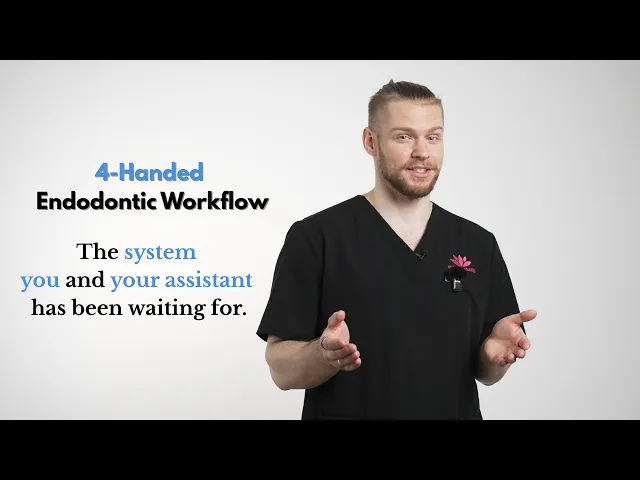
The root canal workflow nobody teaches - now a video course.
I used to blame my assistants.
I was wrong.
Then I built a system.
Cohort 3 is closed
Join the waitlist for Cohort 4
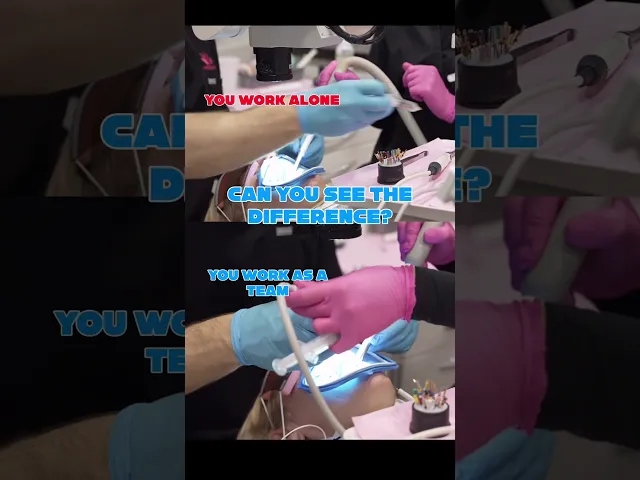
Same tooth. Same dentist.
Two different experiences.
Without system
You look for instruments.
You ask where the NaOCl is.
You call for the next file.
Procedure takes 120 min.
You leave drained.
With EndoWorkflow
She hands the first instrument.
NaOCl is already in your hand.
It arrives before you ask.
Procedure takes 75 min.
You leave calm.
Without system
You look for instruments.
You ask where the NaOCl is.
You call for the next file.
Procedure takes 120 min.
You leave drained.
With EndoWorkflow
She hands the first instrument.
NaOCl is already in your hand.
It arrives before you ask.
Procedure takes 75 min.
You leave calm.
EndoWorkflow doesn't teach you endodontic technique.
You already know how to treat canals.
This course teaches you everything around the procedure - the system
that makes your clinical skills actually work at full potential.
Setup.
Transfers.
Ergonomics.
Assistant training.
Visit structure.
This is not a course on how to find MB2.
EndoWorkflow doesn't teach you endodontic technique.
You already know how to treat canals.
This course teaches you everything around the procedure — the system that makes your clinical skills actually work at full potential.
Setup. Transfers. Ergonomics. Assistant training. Visit structure.
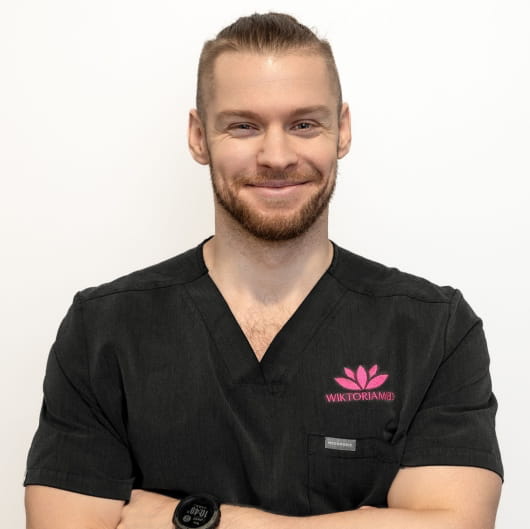
About the instructor
Dr Bartosz Szczepanik
Polish endodontist.
~1,200 canals/year for the last 6 years.
4 days/week.
Module 1 - The System Foundation (3 lessons)
Module 2 - The EndoWorkflow In Action (25 lessons + workbook)
Module 3 - Ergonomics & Assistant Training (13 lessons + workbook)
Module 4 - Advanced Implementation
Discord community with direct access to me
I'm your mentor through it.
"Irritation, anger, and burnout are feelings I experience almost every day at work. It all stems from the fact that I have my own procedures, but the people I work with can't read my mind. For years, I've struggled to translate what I have organized in my head into my daily routine, and I haven't been able to communicate it effectively to my assistants. But then... Dr. Bartosz appears. It's something I didn't ask for, but something I truly needed."

Dr Wojciech Papla
Poland
“Less talking, less searching. My endo is just faster.”
“Less talking, less searching. My endo is just faster.”
Dr Przemysław Pietrzyk
Poland
About the instructor
Dr Bartosz Szczepanik
Polish endodontist.
~1,200 canals/year for the last 6 years.
4 days/week.
What's inside
Module 1 — The System Foundation (3 lessons)
Module 2 — The EndoWorkflow In Action (25 lessons + workbook)
Module 3 — Ergonomics & Assistant Training (13 lessons + workbook)
Module 4 — Advanced Implementation
Discord community with direct access to me
I'm your mentor through it.
COHORT 1 - OPENING SOON
One system.
Yours.
Join the waitlist. Get early access.
Pay the founder price before it's gone.
$249
FOUNDER PRICE · COHORT 1 ONLY
Regular price: $799
"Irritation, anger, and burnout are feelings I experience almost every day at work. It all stems from the fact that I have my own procedures, but the people I work with can't read my mind. For years, I've struggled to translate what I have organized in my head into my daily routine, and I haven't been able to communicate it effectively to my assistants. But then... Dr. Bartosz appears. It's something I didn't ask for, but something I truly needed."
Dr Wojciech Papla
Poland
"High assistant turnover used to mean constant chaos. After EndoWorkflow, new assistants get their homework before they even meet me. They show up knowing the protocol. Less chaos between patients. Less chaos during the procedure. I can finally focus on the tooth."
Dr Idar, Poland
“Love your course! My boss gifted me a subscription and we've been working on our workflow for the past weeks!”
“Love your course! My boss gifted me a subscription and we've been working on our workflow for the past weeks!”
Dr Max G.
Austria
Your assistant is not helping you.
She is half of your speed, half of your ergonomics,
and half of your patient's comfort.
Your assistant is not helping you.
She is half of your speed, half of your ergonomics,
and half of your patient's comfort.
Give her a system - and watch everything change.
Give her a system - and watch everything change.
How long will this take to complete?
Most students finish in 3 to 4 weeks. 15-20 minutes a day alongside your clinical schedule. Lifetime access means no deadline. You watch when it fits your life.
Is this live or self-paced?
Self-paced. Watch lessons whenever, rewatch as many times as you want. The only live component is the Discord community where students share their implementation and ask questions.
What's your refund policy?
14-day money-back guarantee.
How long will this take to complete?
Most students finish in 3 to 4 weeks. 15-20 minutes a day alongside your clinical schedule. Lifetime access means no deadline. You watch when it fits your life.
Is this live or self-paced?
Self-paced. Watch lessons whenever, rewatch as many times as you want. The only live component is the Discord community where students share their implementation and ask questions.
What's your refund policy?
14-day money-back guarantee.